
Popular Solutions For Steep Terrain Landscaping Challenges
Find the most effective products to tackle erosion, drainage, and planting on steep slopes with ease and confidence.
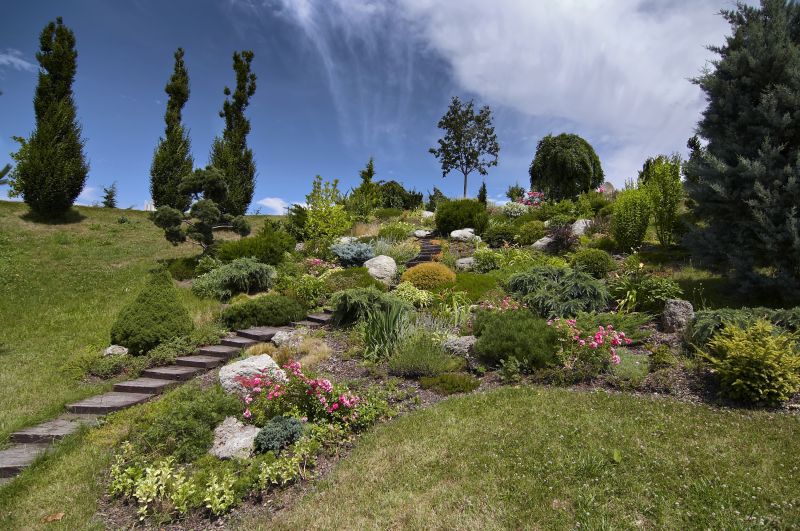 Designing and maintaining landscapes on steep terrain presents unique challenges that require specialized products to ensure stability, safety, and aesthetic appeal. When working with slopes, the primary goal is to prevent erosion, manage water runoff, and create a cohesive visual flow. Various tools and materials are available to help achieve these objectives, from retaining structures to ground covers. Selecting the right products can significantly influence the durability and appearance of a hillside landscape.
Top Overall Option
Heavy-Duty Retaining Wall Blocks
Heavy-duty retaining wall blocks are versatile and sturdy, providing essential structural support for steep slopes. They come in various sizes and finishes, allowing for customization and aesthetic appeal. These blocks are designed to withstand soil pressure and weather conditions, making them a reliable choice for hillside landscaping projects. Proper installation ensures stability and long-term performance, helping to create safe and attractive terraced landscapes.
Types of Products For Steep Terrain Landscapings
Retaining Wall Blocks
Concrete or stone blocks used to build retaining walls that stabilize slopes and create terraced levels.
Erosion Control Fabrics
Geotextile fabrics that help prevent soil erosion and support vegetation growth on slopes.
Terracing Systems
Structures and kits designed to convert steep slopes into flat, usable terraces.
Drainage Pipes and Gravel
Materials used to manage water runoff and prevent water buildup behind retaining structures.
Ground Cover Plants
Low-growing plants that help stabilize soil and reduce erosion on slopes.
Mulch and Bark
Organic mulches that protect soil, retain moisture, and suppress weeds.
Anchors and Stakes
Support stakes and anchors that secure fabrics and plants in place on steep slopes.
Drainage Gravel
Gravel used in drainage systems to facilitate water flow and reduce erosion.
Soil Stabilizers
Chemical or organic products that help bind soil particles and improve stability.
Planting Mixes for Slopes
Specialized soil mixes formulated to support plant growth on inclines.
Landscape Edging
Materials that define and contain planting beds or pathways on slopes.
Rain Chains and Downspouts
Water management tools that direct runoff safely away from slopes.
Natural Stone Steps
Stepping stones or stairs that provide access and aesthetic appeal on steep terrain.
Slope Stabilization Meshes
Mesh fabrics that hold soil and plants in place to prevent sliding.
Terrace Wall Kits
Pre-fabricated kits for constructing terraces on steep slopes.
Waterproof Membranes
Protective layers that prevent water infiltration into retaining structures.
Popular Choices
Interlocking blocks that are easy to install and customize for hillside support.
Synthetic or natural blankets that stabilize soil and promote vegetation on slopes.
All-in-one solutions for creating terraces with integrated support and planting options.
Pre-filled gravel bags that assist with water management and slope stabilization.
Seed blends designed specifically for rapid establishment on slopes.
Pre-formed mulch rolls that simplify application on hillside landscapes.
Support tools for securing fabrics, plants, and edging on steep slopes.
Drainage pipes with perforations to facilitate water flow and reduce erosion risk.
Spray-on seed and mulch mixtures for quick erosion control and revegetation.
Mesh panels that hold soil and vegetation in place on inclines.
Dry-stacked stones that blend seamlessly into natural landscapes while providing support.
Devices that direct runoff away from vulnerable slopes to prevent erosion.
Cages and trellises designed to support plants on steep inclines.
Durable steps that facilitate access on uneven terrain.
Matting materials that promote rapid plant growth and soil stabilization.
Effective solutions often involve a combination of products tailored to the specific slope conditions. For example, retaining walls can provide structural support to hold back soil, while erosion control fabrics help stabilize loose ground. Additionally, terracing systems and strategically placed plants can reduce runoff speed and soil displacement. It is essential to consider the steepness of the terrain, soil type, and intended use when choosing these products.
Proper installation and material choice are critical for long-term success. Heavy-duty anchors and stakes ensure that landscape fabrics and plants stay in place, especially during heavy rains or strong winds. Mulching and ground covers not only help retain moisture but also protect soil from erosion. When planning a hillside landscape, it is advisable to incorporate multiple layers of erosion prevention and structural support to create a resilient and attractive outdoor space.
Investing in high-quality, durable products designed specifically for steep terrain can make maintenance easier and improve safety. Whether you are creating a terraced garden, installing a natural-looking retaining wall, or installing drainage solutions, choosing the right tools and materials is vital. Properly selected products can help transform challenging slopes into functional and beautiful landscape features.
Key Buying Considerations
- Assess the steepness and soil type of the terrain to select appropriate products.
- Determine the primary purpose, whether for erosion control, structural support, or aesthetic enhancement.
- Consider the durability and weather resistance of materials to ensure long-term performance.
- Evaluate installation requirements and whether professional help is needed.
- Select products that can accommodate water drainage to prevent water buildup and erosion.
- Think about the compatibility of materials with existing landscape features.
- Choose versatile products that can be combined for layered solutions.
- Review the size and weight of products for ease of handling and installation.
- Prioritize products with good reviews for performance and ease of use.
- Ensure that the selected products meet safety standards and are suitable for your specific slope conditions.
- Consider maintenance requirements and long-term upkeep.
- Look for options that allow for future expansion or modifications.
- Check for compatibility with plant types you intend to use for stabilization.
- Assess budget constraints while balancing quality and longevity.
- Research local regulations or permits related to hillside landscaping projects.
This content contains affiliate links. Purchasing through these links may earn a commission at no additional cost to you, supporting the continued creation of helpful content.